The twin is the rehearsal. Your site is the school.
Before day one
Before any hardware is ordered we build a simulated copy of your site and show the fleet patrolling it at night while you configure the checks in plain language. The twin sizes the fleet, proves the routes and docks, and makes the fleet safe before it ever touches your floor. An indoor site can be captured with a walk-through scan on a phone; warehouses, cold stores and data centres can also be built from floor plans and rack layouts. Mine and farm perimeters come from satellite and elevation data plus the drone or survey scans most sites already have.
From day one
The twin is not the product. From the first patrol the fleet learns from your actual yard, your actual locks and your actual night. Checks are trained on your objects. Corrections from your operators are kept. The fleet gets better on your site, not in a simulator.
The twin keeps working
Your digital twin becomes the fixed test course every improved model must pass before it ships to your fleet.
The proof so far
One script runs the full scenario end to end: a plain-English instruction, a randomised patrol with inspection stops, a self-dock, an undock and a second lap. It passed four times in a row on different random seeds in a simulated depot: 32 of 32 patrol legs, 8 of 8 docks, 16 of 16 correct inspection verdicts. The same test passed on two different robot bodies with no rewrite.
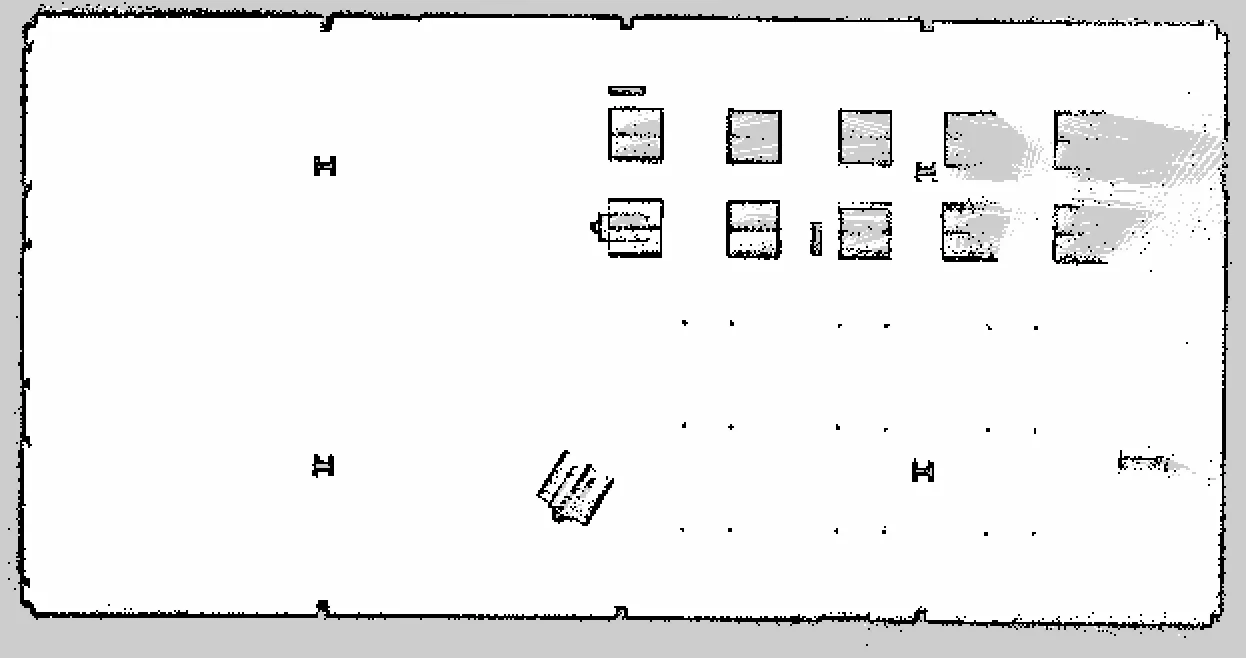
The map the robot built
Dropped into an unfamiliar simulated depot, the robot mapped it on its own, then reached goals within 2 to 4 cm and re-planned around an obstacle dropped into its path.
What the robot saw
Three frames from one proof-gate run, exactly as the robot captured them, with what the system concluded about each.
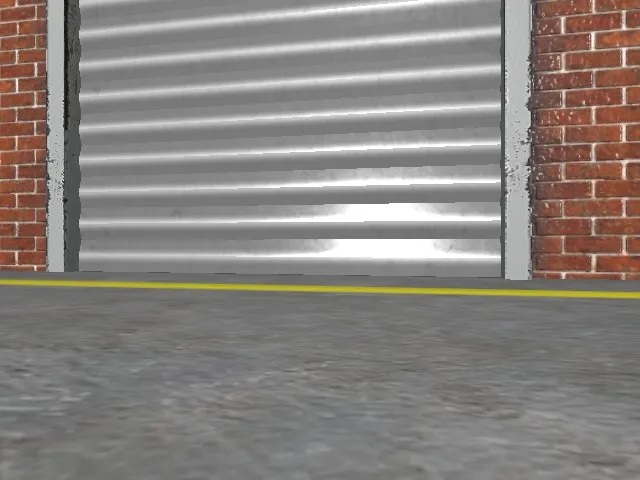
Plain-language instruction
"Go to the loading dock and take a picture"
The AI planned it as three steps: check the robot status, drive to the loading dock, take a picture. This is the picture.
9 Oct 2026, 04:49 UTC
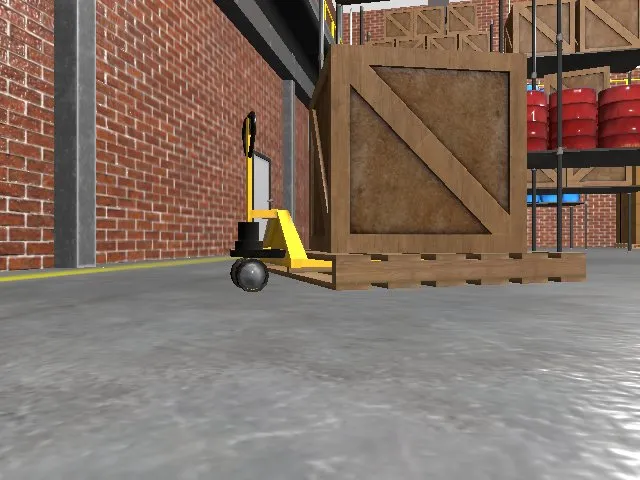
Inspection check · Aisle A
PASSRack intact
"A shelving rack is visible at the upper right with red drums and crates on its shelves, and its vertical uprights and horizontal beams look straight and intact, with no sign of leaning or collapse."
9 Oct 2026, 04:50 UTC · judged by the inspection model
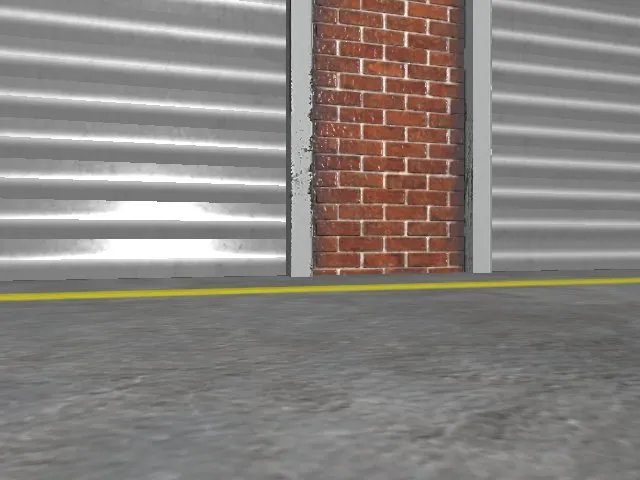
Inspection check · Loading dock
PASSRoller doors closed
"The corrugated horizontal-slat shutters on the left and right extend down to the floor with no gap beneath them and no interior or daylight visible, while the brick section in the middle is just a wall pillar between two closed doors."
9 Oct 2026, 04:51 UTC · judged by the inspection model
Simulated camera frames from a stand-in shaped like our first robot, one proof-gate run. Verdict text is the model's output, unedited. These are not real-camera images; real-camera inspection starts on the bench robot.
Honest limits
Moving traffic has to be modelled deliberately, and heat and night imagery simulate poorly, so night perception is validated on real hardware at pilot sites.
The proof gate and two-body result are proven in simulation. A twin of a real room built from a phone scan is in daily use as the test course for the first robot. Client twins are partly proven; mine and farm twins are planned.
Ready to see robots patrolling your site?
Before any hardware is bought, we can build a simulated copy of your site and show the fleet patrolling it at night while you configure the checks in plain language.