Camera alert? Send the robot.
Most sites already have cameras and a control room. What they lack is someone to go and look at 3 a.m. without putting a person in harm's way. The fleet plugs into the cameras you have and becomes the first responder.
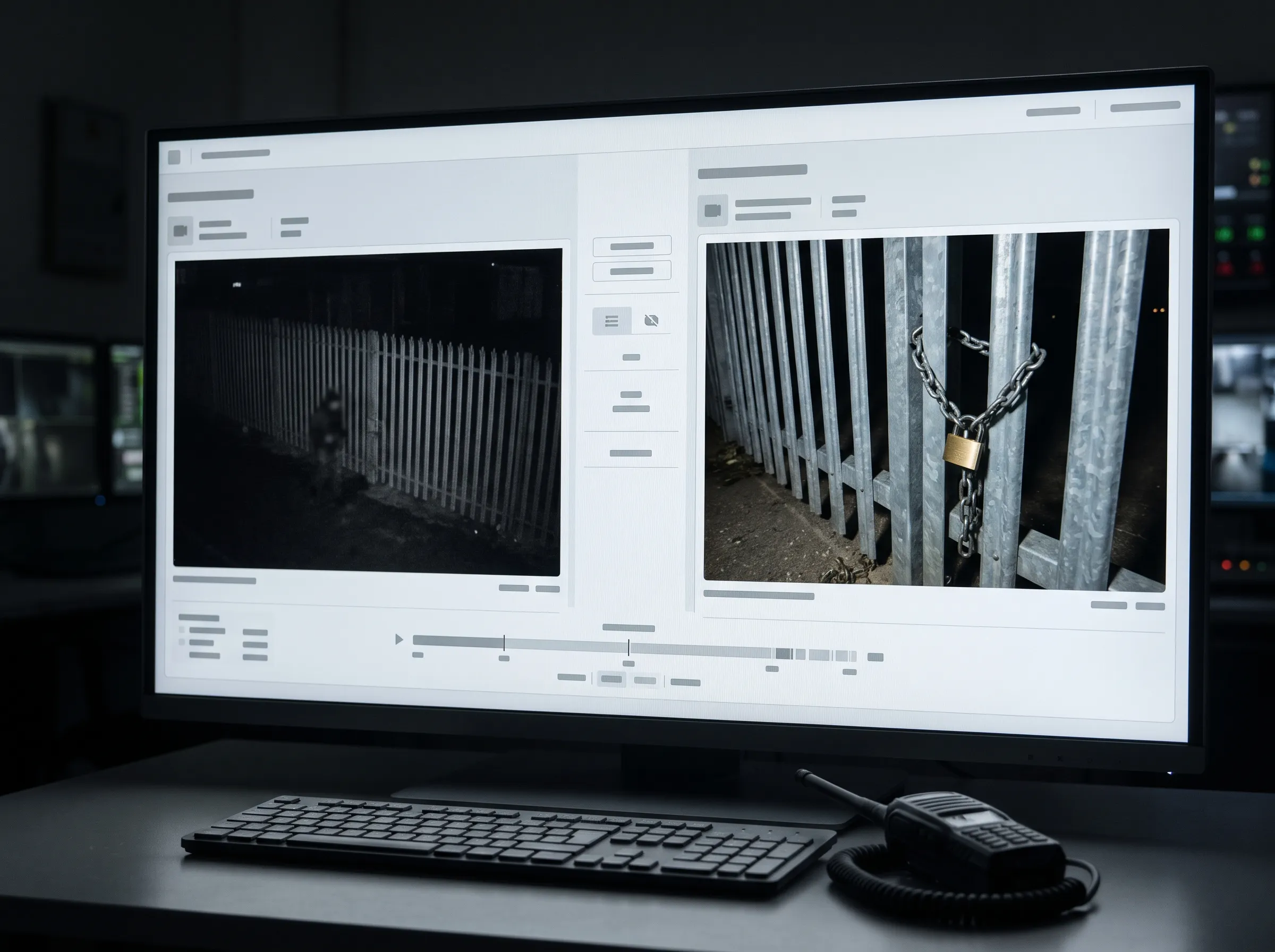
Representative render
How it works
- 01A camera raises an event. A tripwire, a zone intrusion, motion where there should be none. Within a second the control room has the event and a snapshot.
- 02AI reads the snapshot. A person at the fence, a vehicle at the gate, a cat on the wall. Every verdict is logged with the image it was made from.
- 03Your site's rules decide. Ignore it, alert the operator, or alert and send the robot. Quiet hours and a limit per camera stop a faulty sensor sending the robot ten times.
- 04The robot goes to look. It leaves its dock, or diverts from patrol, to the place that camera watches. It lights the scene, can speak through its own audio, and comes back with photos as evidence. It never pursues.
- 05One incident, one record. The camera clip, the AI verdict, the robot's photos and what it saw all land on the same alert. The operator closes it with a verdict, and every step is in the audit log.
What it changes for the control room
- Fewer false call-outs. The robot verifies before a vehicle is dispatched or a guard is sent into the dark.
- People out of harm's way. The first thing an intruder meets is a robot with a camera, not a person.
- No camera replacement. Works with standard CCTV recorders over their standard interfaces. Your cameras, your recorder, your control-room staff.
- Earned autonomy. New rules start alert-only. "Send the robot" is switched on per camera once your operator has watched it behave. An operator can override at any point: send, hold, come home, or take the controls.
Rules of engagement, unchanged
Never pursue. Alert first. Protect the guard. Log everything for evidence. Sending the robot to investigate changes nothing about those rules.
In build: the camera-triggered loop is the first version of the control room, proven in the digital twin first and then on the floor. Already proven on the real robot: investigate-with-a-photo on a plain-language instruction, and the lost-link behaviour (hold, return home, report).
Ready to see robots patrolling your site?
Before any hardware is bought, we can build a simulated copy of your site and show the fleet patrolling it at night while you configure the checks in plain language.